
A headache after a stressful day can feel very different from the throbbing pain and nausea of a migraine attack. At other times, however, the symptoms overlap enough to make the distinction less obvious.
Understanding migraine vs tension headache can help you describe your symptoms more accurately and know when a medical evaluation may be useful.
Migraine and tension-type headache are both common primary headache disorders, but the typical pain pattern and associated symptoms are different.
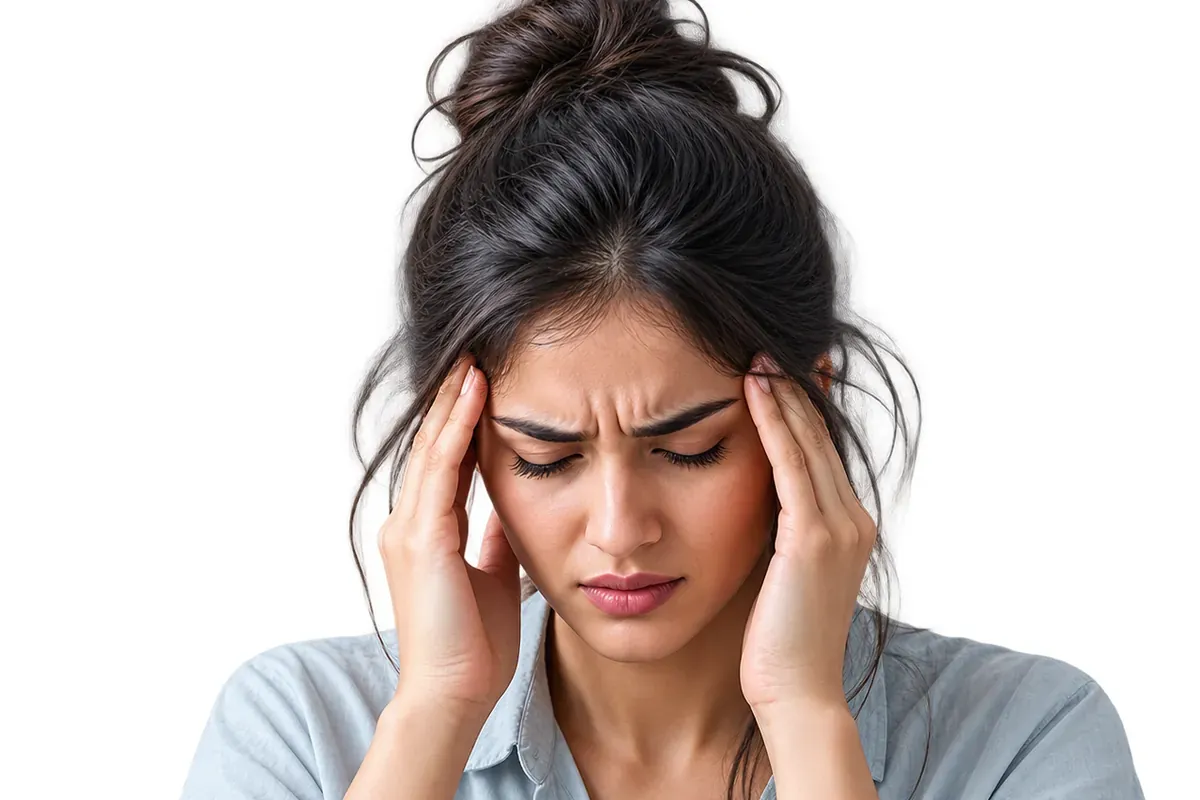
Migraine vs Tension Headache at a Glance
| Feature | Migraine | Tension-Type Headache |
|---|---|---|
| Typical pain | Throbbing or pulsating | Pressure, tightness or aching |
| Location | Often one side, but can affect both | Usually both sides |
| Intensity | Often moderate to severe | Usually mild to moderate |
| Physical activity | May make pain worse | Usually does not significantly worsen pain |
| Nausea | Common in migraine | Usually absent |
| Light sensitivity | Common | Can occur, but usually less prominent |
| Sound sensitivity | Common | Can occur, but usually less prominent |
| Duration | Often several hours and sometimes longer | Can last from a short period to many hours |
| Aura | May occur in some people | Not typical |
These are general patterns rather than a self-diagnosis checklist. Individual symptoms can vary.
What Does a Migraine Feel Like?
Migraine is a neurological disorder, not simply a severe headache.
The headache phase often involves moderate to severe pain that may feel pulsating or throbbing. The pain frequently occurs on one side of the head, although both sides can be affected.
Common migraine symptoms include:
- nausea
- vomiting
- sensitivity to light
- sensitivity to sound
- sensitivity to smells
- worsening discomfort during routine physical activity
- difficulty concentrating
Some people also experience migraine aura.
Aura can involve temporary visual or sensory symptoms such as flashing lights, blind spots, tingling or other neurological changes. Not everyone with migraine experiences aura.
Migraine may also involve symptoms before and after the headache itself, including tiredness, mood changes, neck discomfort or difficulty concentrating.
What Does a Tension Headache Feel Like?
Tension-type headache more commonly produces a dull, pressing or tightening sensation.
People often describe it as:
- pressure around the forehead
- a tight band around the head
- aching on both sides
- pressure around the temples
- discomfort extending towards the neck
The pain is generally less disabling than a typical migraine attack and is usually not made substantially worse by ordinary activities such as walking.
Nausea and vomiting are not typical features of tension-type headache.
The Biggest Differences Between Migraine and Tension Headache
1. Type of pain
Migraine often feels pulsating or throbbing.
Tension headache is more likely to feel like pressure or tightness.
2. One side vs both sides
Migraine frequently affects one side of the head, although bilateral migraine is possible.
Tension headache usually affects both sides.
Location alone therefore cannot confirm the diagnosis.
3. Nausea
Nausea is a common feature of migraine.
It is generally not a typical feature of tension-type headache.
If your headache repeatedly occurs with nausea or vomiting, that information is particularly useful to share with your doctor.
4. Light and sound
Strong sensitivity to light and sound is much more characteristic of migraine.
A person experiencing migraine may want to lie in a quiet, dark room until the episode settles.
Sensory sensitivity can occur with other headache disorders, but prominent light and sound sensitivity points more strongly towards migraine.
5. Movement
Normal physical activity can aggravate migraine.
Walking quickly, climbing stairs or bending down may make the pain feel worse during an attack.
A tension headache is generally less affected by ordinary movement.
What Causes Migraine and Tension Headache?
Neither condition can always be attributed to one simple cause.
Migraine
Migraine involves a combination of genetic and neurological factors.
Individual attacks may be influenced by triggers such as:
- irregular sleep
- stress
- skipped meals
- hormonal changes
- bright lights
- alcohol
- excessive or changing caffeine intake
- certain smells
- weather changes
Triggers vary between people.
Tension-Type Headache
Tension-type headache is often associated with factors including stress and musculoskeletal discomfort involving the neck and surrounding areas.
However, the biology of tension-type headache is more complex than simply having "tight muscles".
People with frequent tension-type headaches should therefore avoid assuming that massage or posture correction alone will necessarily solve the problem.
Can Someone Have Both Migraine and Tension Headaches?
Yes.
Having migraine does not prevent a person from experiencing tension-type headaches at other times.
This can make self-diagnosis difficult.
For example, someone may have occasional pressure-like headaches during stressful working days as well as separate episodes involving throbbing pain, nausea and light sensitivity.
Recording the characteristics of each episode can help a doctor identify whether more than one headache pattern is present.
Could a Tension Headache Turn Into a Migraine?
A tension-type headache does not simply "turn into" migraine in the usual sense.
They are classified as different headache disorders.
However, symptoms can overlap, and migraine attacks can begin mildly before becoming more severe. This may make an early migraine feel similar to another type of headache.
If your headaches repeatedly change character during an episode, mention this during your consultation.
Keep a Headache Diary
When the difference between migraine and tension headache is unclear, track your symptoms.
Record:
- where the pain occurs
- whether it throbs or feels like pressure
- severity
- duration
- nausea
- light sensitivity
- sound sensitivity
- whether movement makes it worse
- possible triggers
- medicines taken
- response to medicine
This provides far more useful information than simply telling your doctor, "I get headaches often."
When Should You Consult a Doctor?
Consider medical evaluation if headaches:
- occur frequently
- are becoming more severe
- interfere with work or sleep
- regularly require medication
- have changed from your previous pattern
- are difficult to classify
Seek urgent medical attention if a headache appears suddenly and severely or occurs with symptoms such as confusion, seizures, weakness, numbness, speech difficulty, marked neck stiffness or after significant head trauma.
Ayurvedic Assessment of Recurrent Headaches
Ayurveda does not assess every headache in exactly the same way.
An Ayurvedic physician may consider the location and character of the pain alongside associated symptoms, digestion, sleep, stress, diet, daily routine and individual constitution.
This is particularly relevant because headache is a symptom, not one single condition.
Before choosing an Ayurvedic treatment plan, it is therefore necessary to understand whether the clinical pattern is consistent with migraine, tension-type headache or another condition requiring further investigation.
Migraine vs Tension Headache: The Main Takeaway
A simple way to remember the typical difference is:
Migraine: more commonly throbbing, moderate to severe, worsened by activity and associated with nausea or strong sensitivity to light and sound.
Tension headache: more commonly pressure-like or tightening, affecting both sides of the head and occurring without prominent nausea.
Real-life headaches do not always follow textbook patterns, so persistent or recurring symptoms should be evaluated rather than self-diagnosed.
Frequently Asked Questions
How can I tell if my headache is a migraine or tension headache?
Migraine is more likely to involve throbbing pain, nausea and sensitivity to light or sound and may worsen with normal activity. Tension headache usually causes pressure or tightness on both sides without significant nausea.
Is a tension headache less painful than a migraine?
Tension headaches are often mild to moderate, while migraine is frequently moderate to severe. However, individual experiences vary.
Can a migraine feel like pressure instead of throbbing?
Yes. Not every migraine follows the classic throbbing pattern, which is one reason diagnosis should consider the complete group of symptoms rather than pain quality alone.
Does nausea occur with tension headaches?
Prominent nausea is much more characteristic of migraine and is generally not typical of tension-type headache.
Can stress cause both migraine and tension headaches?
Stress can be associated with both conditions. However, they remain different headache disorders and should not be diagnosed based on stress alone.
This article is for general information only and is not a substitute for medical advice. Please consult a qualified doctor about your symptoms.