People exploring Ayurveda for recurring migraine frequently encounter the term Panchakarma.
This can create the impression that Panchakarma is one standard detoxification programme given to every migraine patient. Classical Ayurvedic practice is more individualised than that.
Panchakarma for migraine may involve selected procedures based on the person's clinical presentation, Ayurvedic assessment, strength, age, digestion, associated health conditions and suitability for a particular procedure.
Not every person with migraine requires every Panchakarma therapy.
What Is Panchakarma?
Panchakarma refers to a group of therapeutic procedures described in Ayurveda.
The classical framework includes five principal therapeutic actions, although their practical selection depends on the clinical condition and individual assessment.
Treatment may also involve preparatory procedures before the main therapy and a period of post-procedure care afterwards.
The objective in Ayurveda is not simply to book a "detox package". Panchakarma is a clinical intervention and should be planned and supervised by a qualified Ayurvedic physician.
Is Panchakarma Used for Migraine?
Yes, Panchakarma procedures have traditionally been used in Ayurvedic management of headache disorders and have also appeared in clinical research involving migraine.
A review of Ayurveda-related migraine studies found that Panchakarma procedures were included in several of the investigated treatment protocols.
Nasya appeared particularly frequently, while Virechana was included in some studies.
However, studies have used different combinations of interventions. This means there is currently no single research-backed Panchakarma protocol that can be declared the correct treatment for every migraine patient.
Why Is Individual Assessment Important?
Two people can both have migraine while experiencing very different patterns.
One may have:
- severe nausea
- heat sensitivity
- irregular digestion
- headaches after missed meals
Another may experience:
- disturbed sleep
- stress-related attacks
- neck discomfort
- constipation
- anxiety
Their conventional diagnosis may be similar, but their Ayurvedic assessment may not be.
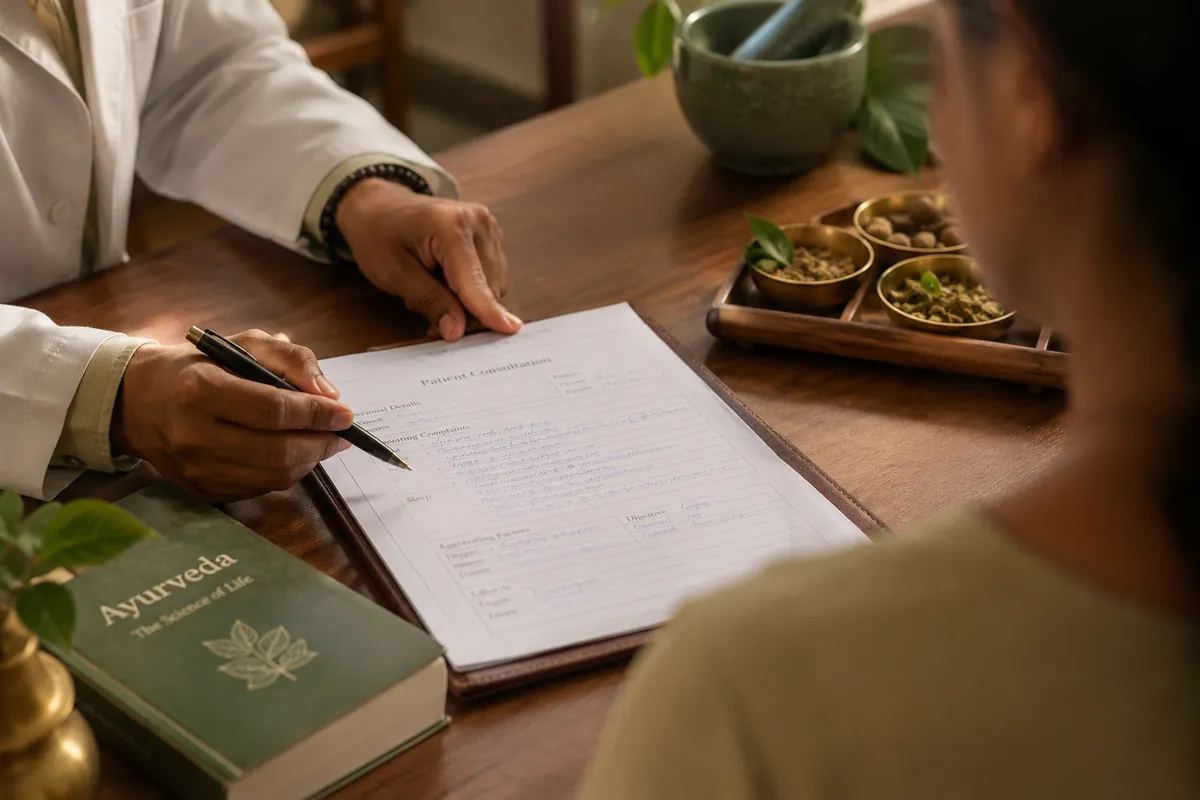
Before recommending Ayurveda Panchakarma for migraine, the physician may therefore evaluate:
- migraine frequency
- duration
- severity
- aura
- nausea or vomiting
- triggers
- digestion
- bowel habits
- sleep
- diet
- stress
- general strength
- existing medical conditions
- medicines currently being taken
Which Panchakarma Therapies May Be Considered for Migraine?
The exact treatment plan varies. Procedures discussed in relation to migraine include the following.
Nasya for Migraine
Nasya is one of the Ayurvedic procedures most frequently associated with disorders involving the head.
It involves the controlled nasal administration of an appropriately selected substance under Ayurvedic guidance.
Nasya for migraine has also been included in several published Ayurvedic clinical protocols.
The exact medicine, amount, timing and course should be determined after consultation.
People should not assume that putting an Ayurvedic oil into the nose at home is equivalent to clinically supervised Nasya.
Virechana
Virechana is a therapeutic purgation procedure used in classical Ayurveda for selected conditions and constitutions.
Some Ayurvedic migraine protocols have included Virechana, particularly where the physician considers it appropriate according to the individual's Ayurvedic presentation.
It requires preparation, supervision and post-procedure dietary care.
It is not suitable as a casual home "cleanse".
Basti
Basti involves the therapeutic administration of specifically prepared substances through the rectal route and holds a major place in classical Panchakarma.
Whether it forms part of migraine management depends on the physician's assessment of the broader clinical presentation.
Basti should not automatically be prescribed simply because someone has been diagnosed with migraine.
Are Shirodhara and Abhyanga Part of Panchakarma?
This distinction is often blurred online.
Shirodhara and Abhyanga are important Ayurvedic therapies and may be used alongside a Panchakarma programme, but they should not simply be described as two of the five classical Panchakarma procedures.
Shirodhara
Shirodhara involves a controlled stream of an appropriate liquid, commonly medicated oil, over the forehead for a defined period.
It may be used as a supportive treatment in an individual plan, particularly where sleep, stress or relaxation are relevant.
Abhyanga
Abhyanga is an Ayurvedic oil application or massage performed with oils selected according to the clinical context.
It can form part of preparatory or supportive care in some treatment programmes.
What Does a Panchakarma Programme for Migraine Look Like?
The exact sequence varies, but Ayurvedic Panchakarma is traditionally understood in stages.
1. Assessment
The physician first decides whether Panchakarma is appropriate at all.
This is the stage where migraine history, current health, medicines, digestive pattern, constitution and other factors are evaluated.
2. Preparatory Phase
Depending on the selected procedure, preparatory measures may be advised.
These can involve internal or external oleation and other classical preparatory practices.
Not every patient follows the same preparation.
3. Main Procedure
The selected Panchakarma procedure is then performed according to the treatment plan.
In migraine-related Ayurvedic care, this might include Nasya or another procedure considered clinically suitable.
4. Post-Treatment Care
Post-procedure care can be as important as the procedure itself.
Diet and routine may be adjusted for a period according to the physician's instructions.
Patients should follow these instructions rather than immediately returning to an unsuitable diet or demanding routine.
Is There Scientific Evidence for Panchakarma for Migraine?
There is some clinical research, but the evidence is still developing.
A published review examining Ayurveda for migraine identified 12 eligible clinical studies. Panchakarma procedures featured in several of the treatment protocols, with Nasya used frequently.
Many studies reported beneficial outcomes.
However, the researchers also identified limitations such as:
- small sample sizes
- short follow-up periods
- variation in treatment protocols
- limitations in outcome measurement
- need for stronger research methodology
This means it is reasonable to discuss Panchakarma as an Ayurvedic treatment approach being studied for migraine, but it would be inappropriate to claim that research has proven Panchakarma permanently cures migraine.
Is Panchakarma Safe for Everyone With Migraine?
No medical or Ayurvedic procedure should be assumed to be suitable for everyone.
Suitability can depend on:
- age
- general health
- pregnancy
- existing medical conditions
- current medicines
- strength and nutritional status
- the specific procedure being considered
A proper consultation should therefore take place before therapy begins.
Can Panchakarma Replace Migraine Medicines?
Do not stop prescribed migraine medicines on your own because you are beginning Panchakarma.
Patients already receiving neurological or other medical treatment should tell their Ayurvedic physician what medicines they use.
Where appropriate, Ayurvedic and conventional care can be coordinated.
The decision to change a prescribed medicine should be made with the clinician responsible for that prescription.
Panchakarma Is Not Emergency Headache Treatment
Panchakarma is not a substitute for emergency medical evaluation.
Seek urgent care for:
- sudden extremely severe headache
- new weakness or numbness
- difficulty speaking
- seizures
- confusion
- severe headache after an injury
- fever with significant neck stiffness
- a major unexplained change in headache pattern
These symptoms require medical assessment rather than assuming that the headache is another migraine attack.
Panchakarma for Migraine in Bengaluru: What Should You Look For?
When researching Panchakarma for migraine in Bengaluru, consider the clinical process rather than choosing only on the basis of a therapy package.
Ask:
- Will I first be evaluated by an Ayurvedic physician?
- Why is this particular procedure being recommended?
- Is the treatment individualised?
- What preparation is required?
- What should I expect during treatment?
- Are there reasons the procedure may not be suitable for me?
- Will my existing medicines be reviewed?
- How will progress be monitored?
These questions help distinguish physician-led Panchakarma from a generic wellness package.
Panchakarma at SriPAA Migraine & Headache Centre
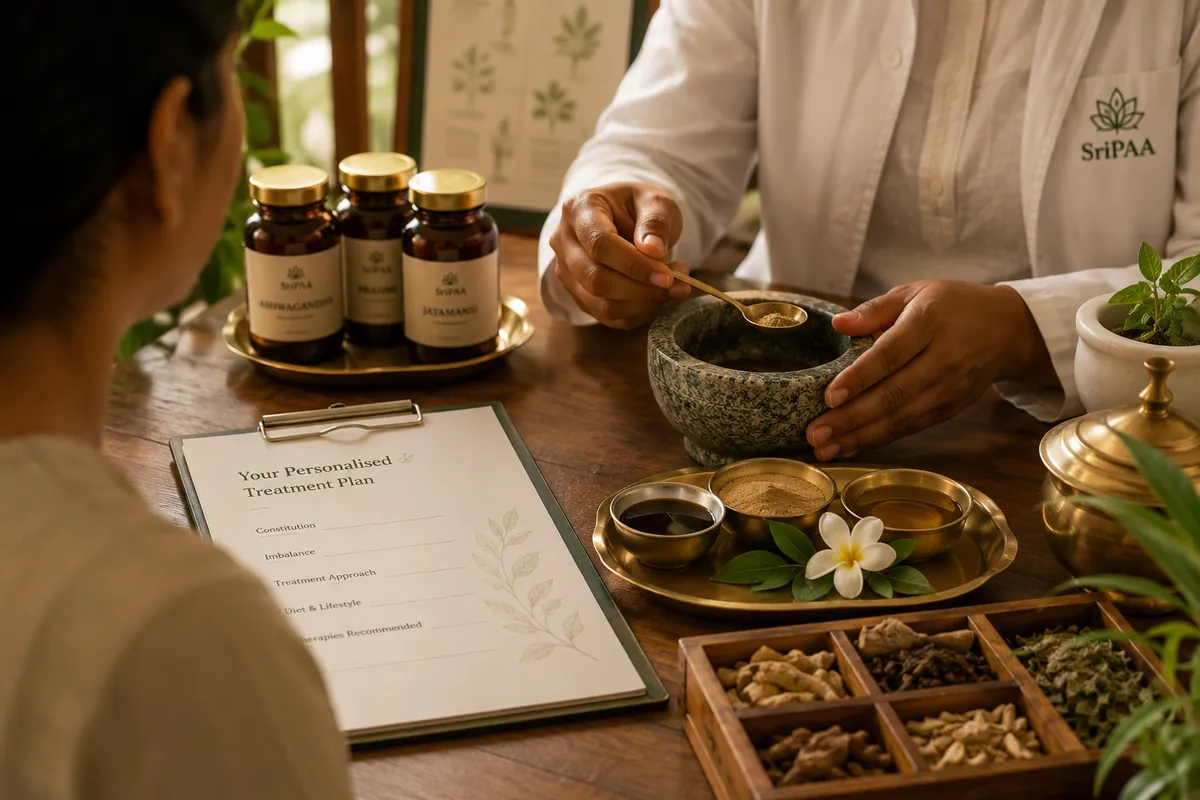
At SriPAA Ayurveda, Panchakarma can be considered as one component of individualised Ayurvedic care rather than a standard therapy package for everyone with migraine.
At the SriPAA Migraine & Headache Centre in Bengaluru, treatment planning begins with assessment of the migraine pattern and the individual's wider health profile.
Where a Panchakarma procedure is clinically appropriate, the Ayurvedic physician can determine which procedure, preparation and follow-up are suitable for that particular patient.
Frequently Asked Questions
Is Panchakarma good for migraine?
Panchakarma procedures are used in Ayurvedic migraine management and have been included in clinical studies, but suitability and response differ between patients. Evidence remains limited and does not establish one universal Panchakarma treatment for migraine.
Which Panchakarma treatment is commonly used for migraine?
Nasya appears frequently in Ayurvedic migraine practice and research. Other procedures may be considered according to individual assessment. There is no single procedure suitable for every patient.
Is Nasya effective for migraine?
Nasya has been included in several Ayurvedic clinical studies involving migraine, but more high-quality research is needed before definitive conclusions can be made.
How many days of Panchakarma are needed for migraine?
There is no universal duration. The recommended course depends on the procedure, the individual patient's condition and the treatment plan created by the Ayurvedic physician.
Where can I get Panchakarma for migraine in Bengaluru?
SriPAA Ayurveda's Migraine & Headache Centre in Bengaluru can assess patients with recurring migraine and determine whether Panchakarma or another Ayurvedic management approach is appropriate.
This article is for general information only and is not a substitute for medical advice. Please consult a qualified doctor about your symptoms.